


There is a magazine on my shelf that I have never been able to throw away.
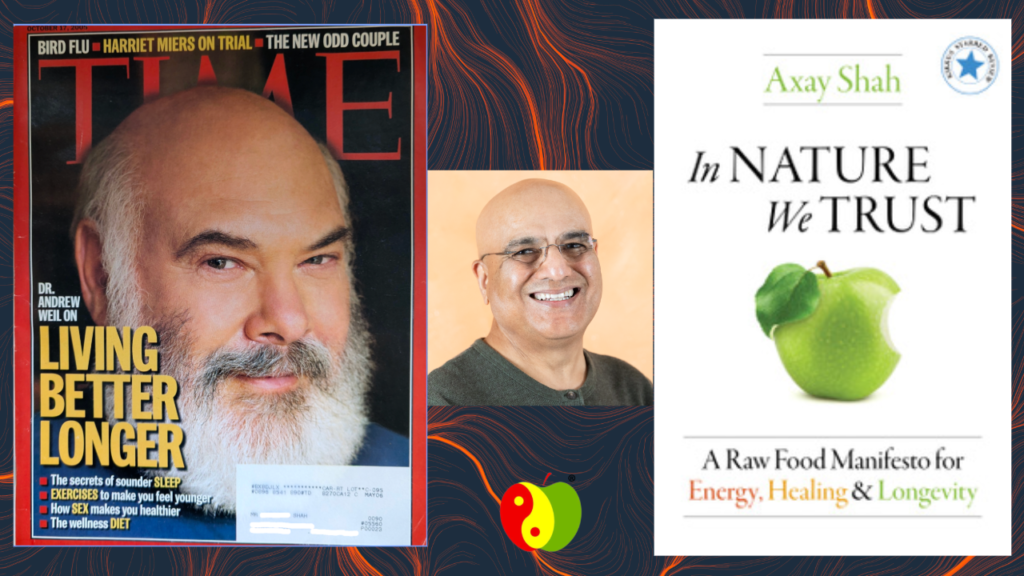
It is a TIME magazine from October 2005. The paper has softened at the edges. The red border has faded. On the cover, a man with a white beard looks out with a quiet half smile. Above him, in bold yellow letters: Living Better Longer.
The man was Dr. Andrew Weil. The magazine arrived at my door when I was 46, busy with work and family, and not thinking much about getting older at all.
I read it cover to cover that week. Then I did something I almost never do with a magazine.
I kept it.
I did not know why at the time. I know now.
A doctor who told the truth about his own age
The excerpt opens with Dr. Weil turning 60. His friends threw him a surprise party, and afterward he sat with an uncomfortable thought. He was entering the years when energy fades and independence slips away.
He did not hide from it. He wrote honestly about noticing more aches, less resilience, less vigor. He even admitted his memory might not be what it was.
I remember how unusual that felt. Here was one of the most famous doctors in America, and instead of selling a miracle, he was telling the truth about his own body.
The reunion question
Then came the story that stayed with me for years.
Dr. Weil described going to his 25th high school reunion. Some of his classmates looked almost unchanged. Others had aged so much he could barely recognize them.
Same birth year. Same school. Same number of birthdays. Completely different bodies.
He asked the question that would quietly move into my mind and never leave: why are some people so altered by time, and others not?
His answer was that it comes from a mix of genes and environment, and that we have real control over some of those factors.
Some control. Two words. I read them in 2005 and I could not stop thinking about them.
Not a plan. A question.
That article did not give me a diet. It did not tell me to change my life. Dr. Weil was cautious, balanced and gentle. He warned readers about the anti-aging industry and its extravagant promises. He suggested that if anyone tried a special program, they should set a time limit and honestly judge whether it was working.
That advice, test it and judge the results, turned out to be one of the most important things I ever read. I just did not know it yet.
His practical guidance was simple. Walk briskly, most days of the week, because the human body was designed to walk. Add some strength training to protect muscle and bone. Stretch, the way cats and dogs do without being told. Rest when you need it. Take naps without guilt. Breathe slowly and deliberately when stress rises. Stay close to the people you love, because touch is a basic human need at every age.
Nothing on that list cost money. Nothing required a prescription. Everything pointed back to the body itself.
I closed the magazine and went back to my life. But the question came with me.
Four years of carrying it
Seeds do not announce themselves. They sit in the dark, doing work you cannot see.
For four years, that question sat with me. How much is in my hands? I started reading more. I started noticing what I ate and how I felt afterward. I started questioning things I had always accepted simply because everyone around me accepted them.
Then, in 2009, the seed broke ground. I stopped wondering and began my own experiment, testing it and judging the results, just as that article had suggested years before.
I have been running that experiment ever since. And I have kept the records, because a test without results is only a hope.
The page I almost missed
Recently I took the magazine down from the shelf and read it again, slowly, the way you reread a letter from an old friend.
This time, one page stopped me.
Near the end, Dr. Weil recommends writing what he calls an ethical will. Not a will for your house or your money, but a written record of the values and life lessons you want to leave behind. He suggests writing it, setting it aside, and revising it as the years pass. He says its greatest gift is not what it leaves your family, but what it gives you while you are still living.
I read that paragraph twice.
Perhaps that is what my book IN NATURE WE TRUST became. Twenty years after that magazine arrived, I had written down everything I had learned about energy, food, nature and trust. Not to leave a fortune. To leave a lesson.
I did not plan it that way. But seeds have their own way of growing.
Thank you, Dr. Weil 🙏
Dr. Weil never knew I existed. He wrote for millions of readers. I was one name on one mailing label in Diamond Bar, California.
Yet his words traveled further than either of us could have imagined.
So today I want to say what I never said back then. Thank you. You planted a seed in a reader you never met. It took years to grow. But it grew.
Now, about you
Somewhere in your life there is a sentence, a book, a conversation that never quite left you. Maybe you read it years ago. Maybe you laughed it off. Maybe you think it is gone.
It is not gone. It is waiting.
You do not need to change your life today. You only need to stop pretending that question is not there. Pick it up. Hold it in the light. Ask what it wants from you.
And when it finally breaks ground, remember who planted it. Then say thank you.
Write and tell me about the seed someone planted in you. I read every reply and comments.
With gratitude,
Axay Shah
